
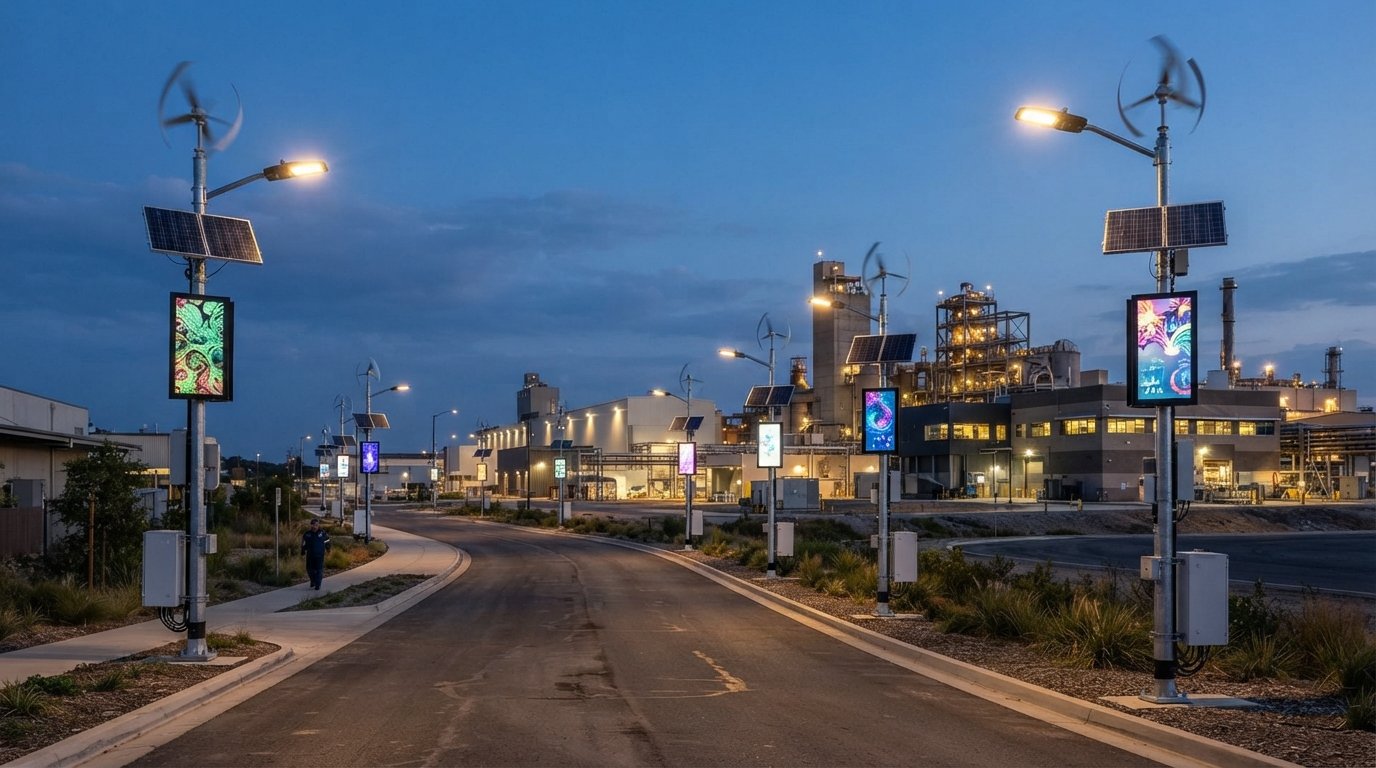
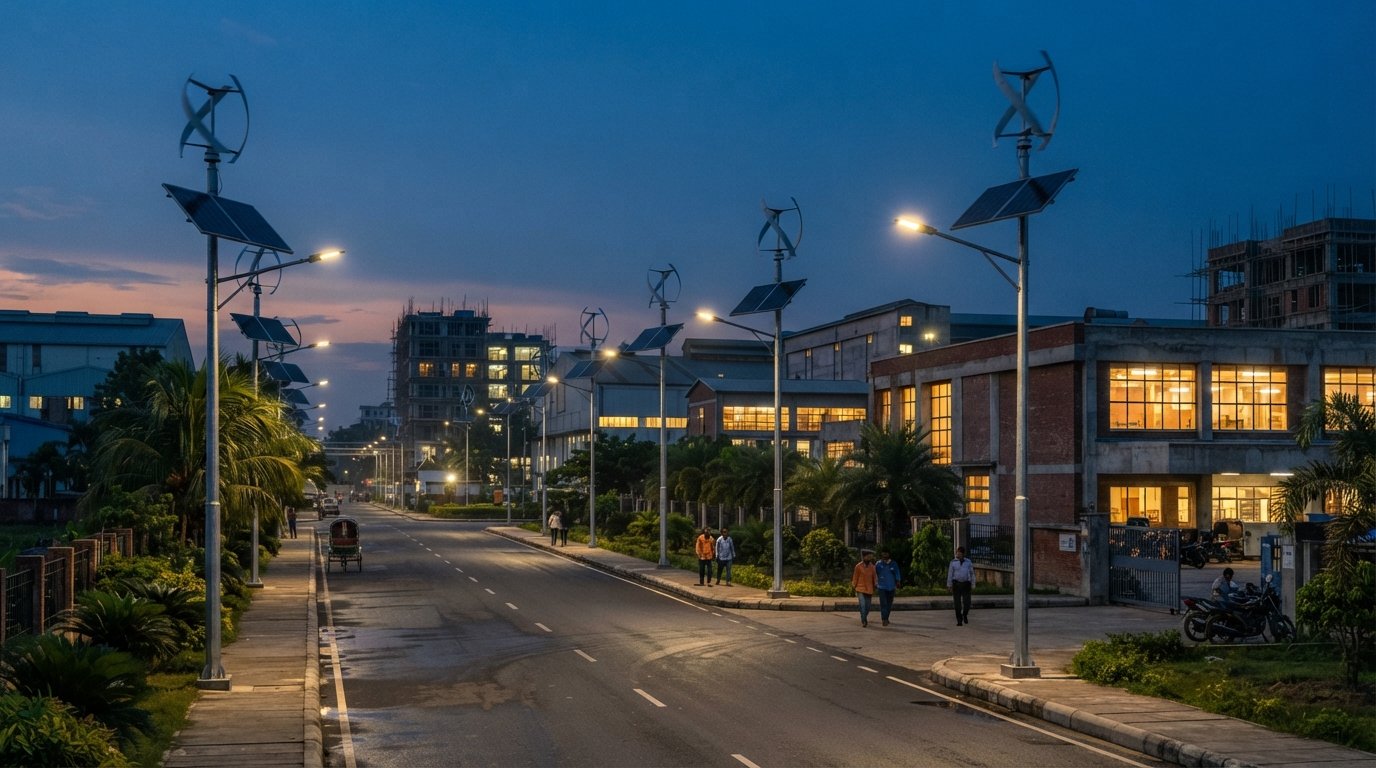
Engineer illumination, pole spacing and operating hours first. Size solar generation and battery autonomy for the lighting duty and seasonal conditions.
Smart Infrastructure
Bring lighting and useful information to the same infrastructure point.
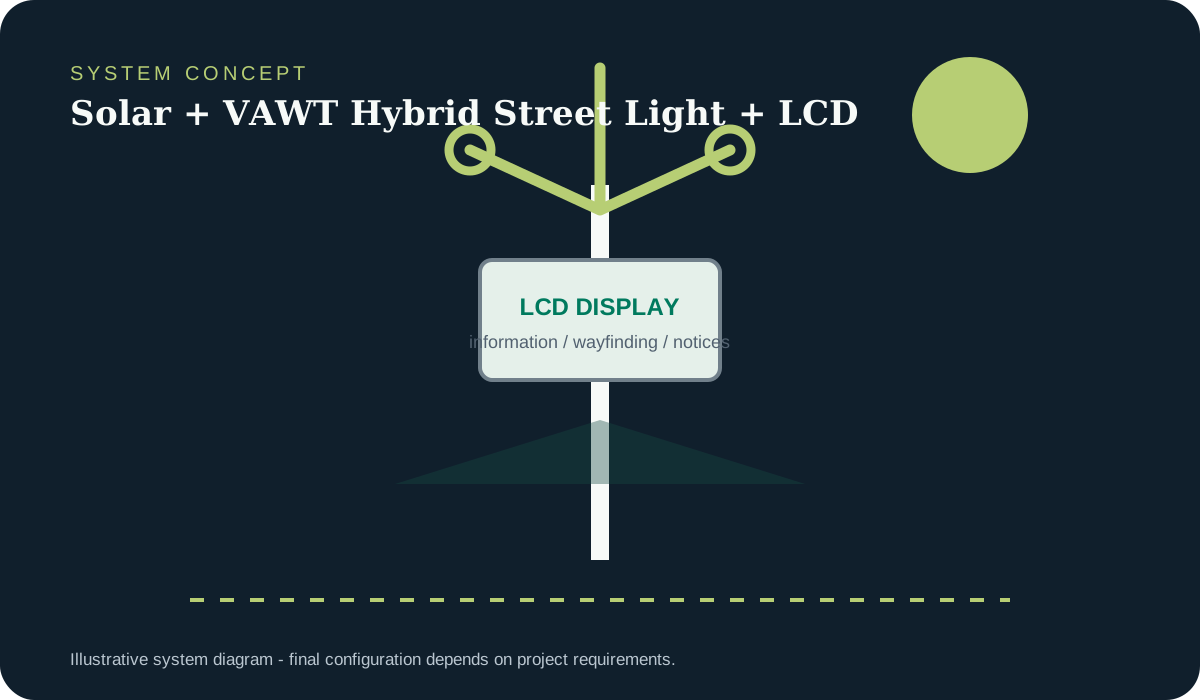
Combine illumination, renewable generation and digital communication where the wind resource and display energy budget justify the configuration.
SMART INFRASTRUCTURE
Infrastructure that works beyond the building.
Solar Street Lights
Illumination first
Pole spacing, lighting distribution, operating hours and battery reserve are specified together.
Explore the systemHybrid Lighting + LCD
Lighting and communication
Assess wind resource, display brightness, connectivity and the total energy budget before choosing a hybrid pole.
Explore the systemSolar-Powered CCTV
Security where it is needed
Match coverage, recording, data connectivity and camera power to the available solar resource and storage.
Explore the systemLighting performance
Confirm lumen output, photometry, mounting height and road-level illumination together.
Energy autonomy
Specify operating hours, dimming, low-sun reserve, battery chemistry and temperature limits.
Connected operation
Define LCD duty, CCTV recording, telemetry, communications and maintenance access.
BUSINESS OUTCOMES
What this can help you achieve
- Support wayfinding, site notices and public information.
- Evaluate complementary solar and wind generation.
- Integrate lighting and display operation under one energy plan.
TECHNICAL UNDERSTANDING
What the design needs to establish
- Site wind resource, turbulence and structural loading
- LCD size, brightness, operating hours and connectivity
- Lighting duty, total energy demand and low-generation reserve
Understand the system
Explore your requirement
Energy Solution Finder
Related solutions and delivery support
Evaluate solar-powered surveillance for remote gates, perimeters and project sites where conventional power and wired data are difficult to extend.
Assess wind at the proposed installation height, turbulence and maintenance access before choosing a vertical-axis wind turbine.
Connect the technical requirement with assessment and project delivery.
Relevant industries
Remote assets, lighting and distributed operating requirements.
Street lighting, public information and distributed security.
Outdoor service continuity, remote sites and public-facing assets.
Build your technical understanding
Understand why kW and kWh answer different questions.
See what a useful assessment needs to establish.
YOUR NEXT STEP
Turn this requirement into a project brief.
Share your site, operating priorities and available data. Start with an assessment, arrange a survey where needed, then discuss the project scope.